

Events at Neurodiversity Ireland

Our events are designed to inform, connect, and empower neurodivergent people and the communities around them.
From conferences and panel discussions to workshops, talks, and community gatherings, our events centre lived experience, evidence-informed practice, and neuroaffirming values. We aim to create spaces that are welcoming, accessible, and grounded in respect for autonomy, diversity, and different ways of being in the world.
Whether you are neurodivergent, a parent or family member, an educator, a healthcare professional, or an ally, our events offer opportunities to learn, reflect, and be part of meaningful conversations that support real change.
Upcoming Events
Browse our upcoming webinars, in-person events and trainings below.
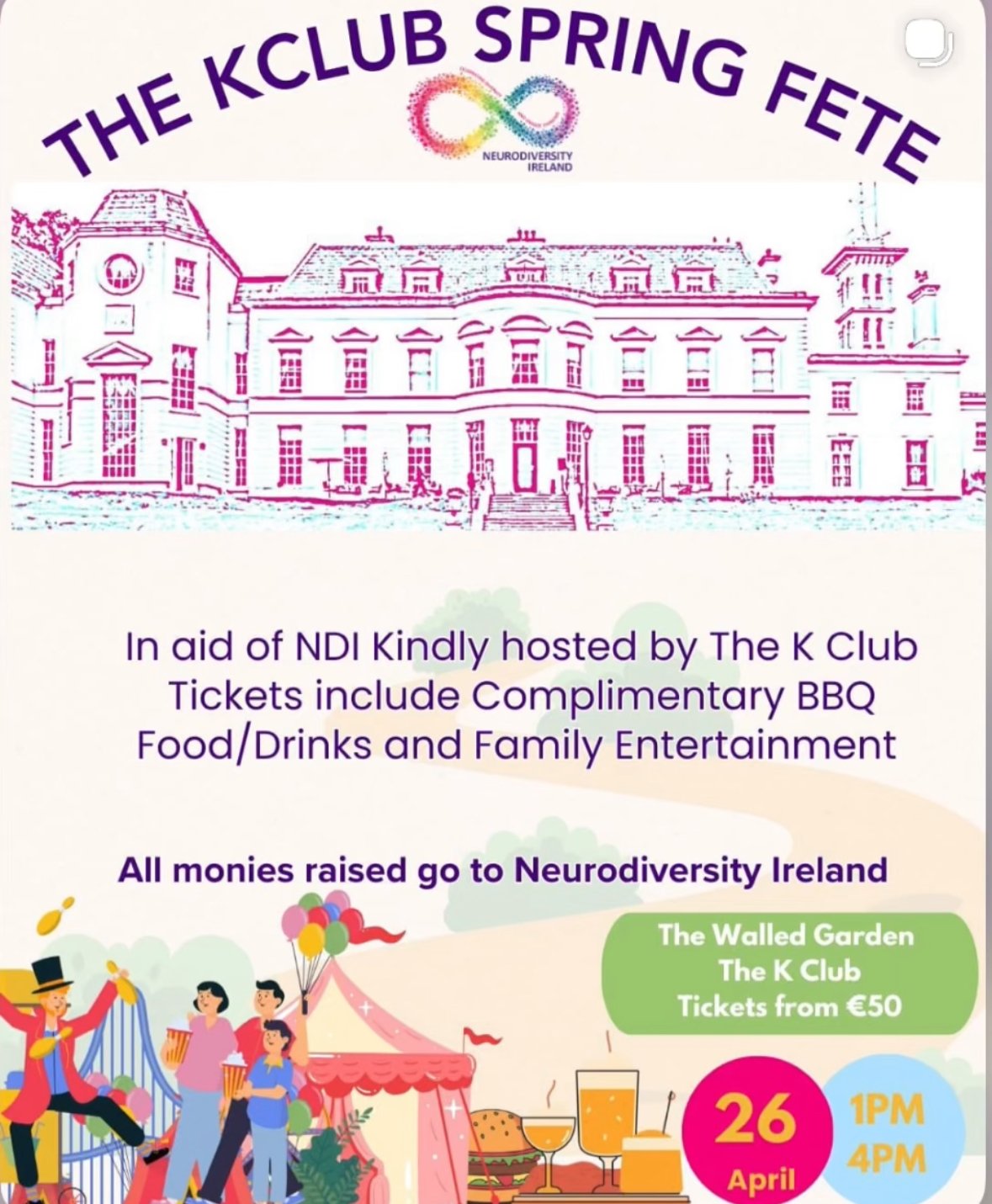
Neurodiversity Ireland Family Garden Party
Kindly hosted by the K Club, join us for a fabulous Family Garden Party to raise funds for Neurodiversity Ireland.
Refreshments, Barbeque and Family Games included
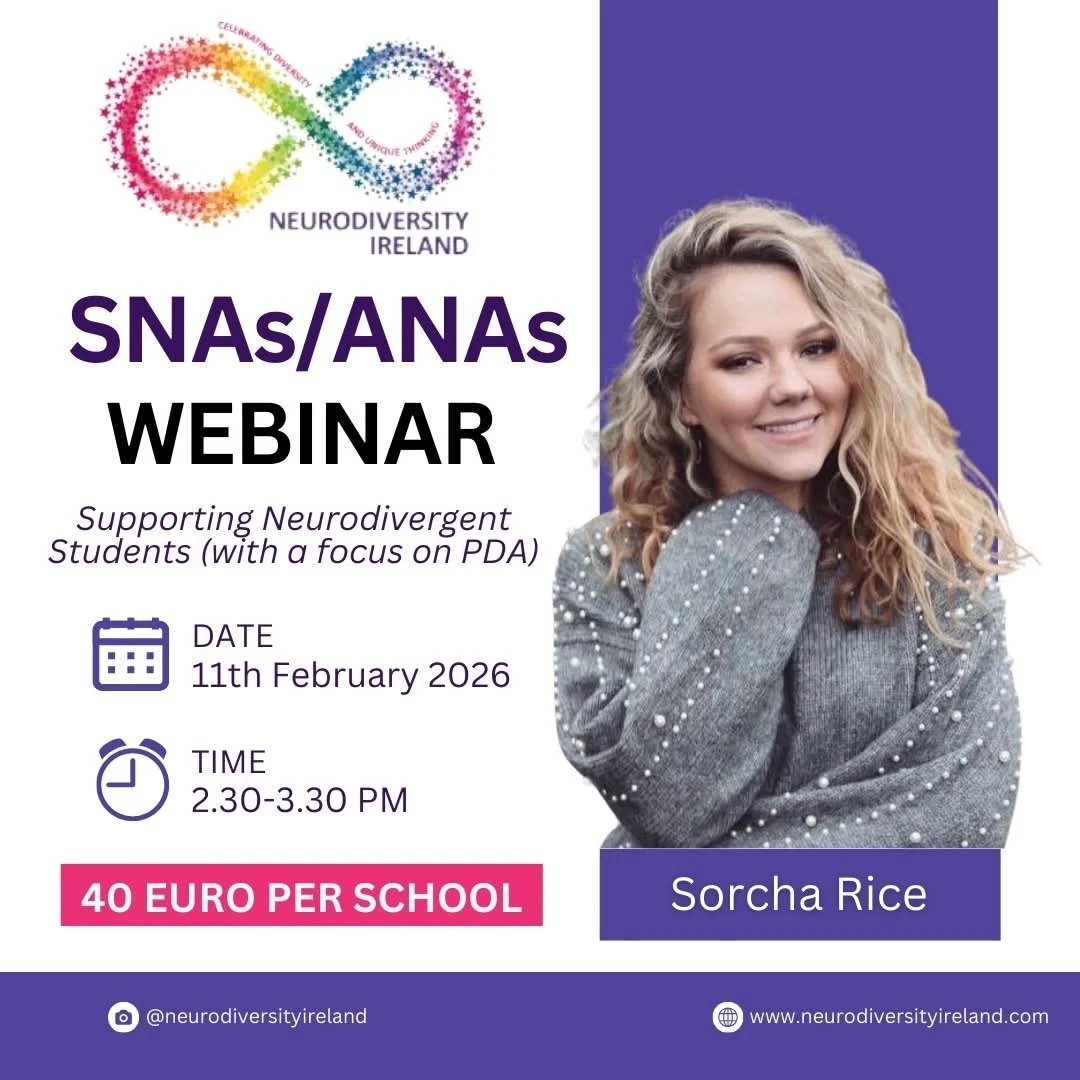
ANA/SNA Webinar: Understanding Neurodiversity
About This Training
This online training is designed for SNAs/ANAs who want to better understand how to connect with and support neurodivergent students, with a particular focus on students with PDA (Persistent Drive for Autonomy).
Many school-based approaches unintentionally increase stress by prioritising compliance over emotional safety.
This training offers a nervous-system and trauma-informed perspective, helping SNAs understand the why behind behaviours often labelled as “challenging,” and how to respond in ways that reduce distress and build trust.
The session focuses on practical, relational strategies that SNAs can use in real school environments—supporting autonomy, co-regulation, sensory needs, and emotional safety, while recognising the realities of school expectations.
The training includes a 50-minute live webinar, a 10-minute Q&A, and a downloadable guide handout to support reflection and implementation in school settings.
Cost: €40 per school (one access link per school)
Event Details
Date: 11th February 2026
Time: 2.30-3.30 pm (Irish Time)
Format: Live on Teams
Cost: €40 per school
About the Host
Sorcha Rice is an Autistic, ADHD, PDA Senior Occupational Therapist and Clinical Manager at Neurodiversity Ireland. She blends lived experience with clinical expertise to promote safety, autonomy, and sensory-supportive environments for neurodivergent children.
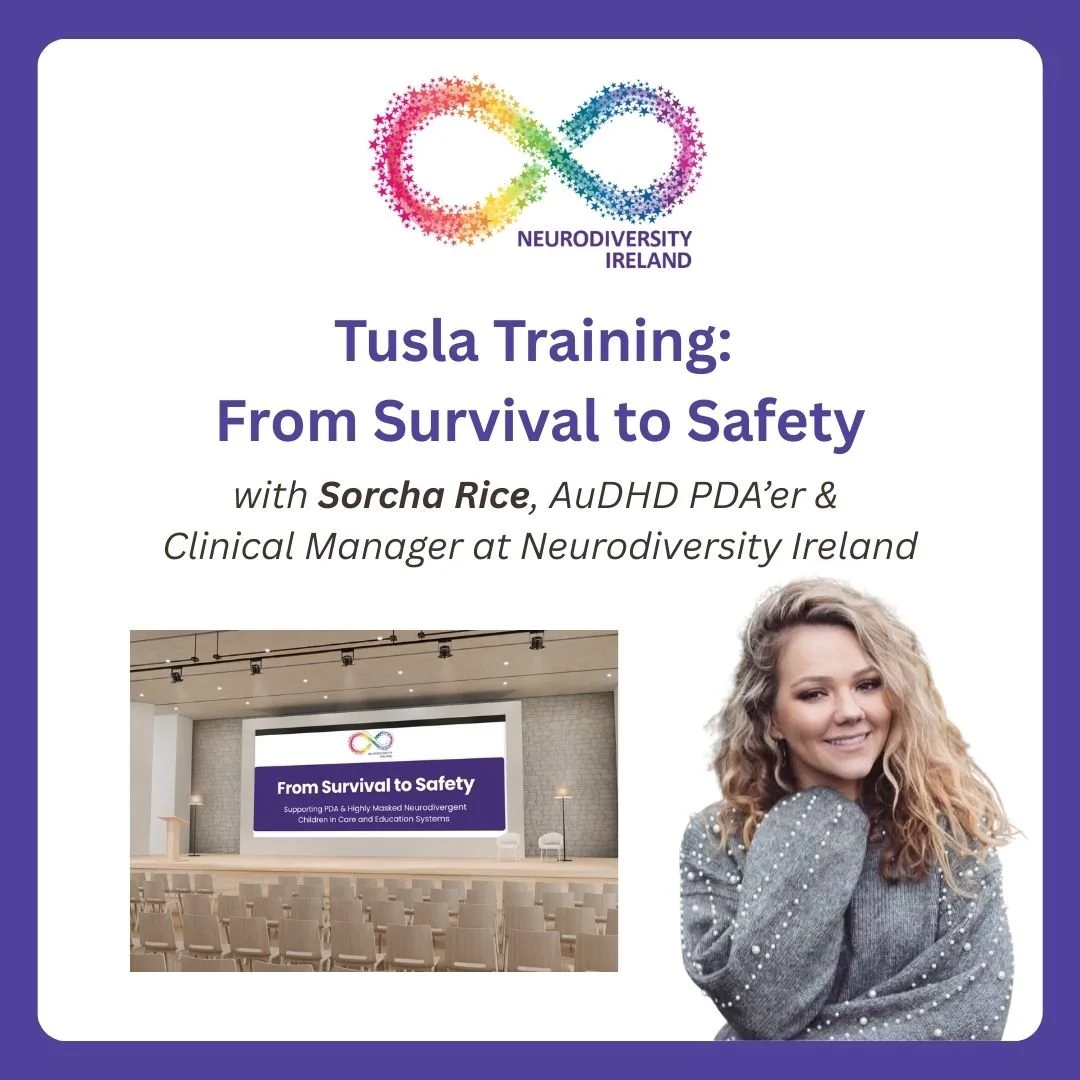
Tusla Training: Survival to Safety (Glór)
About the Training: From Survival to Safety
From Survival to Safety is a trauma-informed, neurodiversity-affirming training designed for professionals working with neurodivergent children and young people in care, education, and other high-pressure systems.
Many neurodivergent children, particularly PDAers and highly masked young people, are still being supported through behaviour management approaches that prioritise compliance over safety. This training offers a different lens: one that understands behaviour as communication and distress as a nervous system response, not a behavioural choice.
Delivered by Sorcha Rice, an Autistic, ADHD occupational therapist with a PDA profile, this training is deeply shaped by lived experience as well as clinical practice. It is also informed by survey responses from neurodivergent people reflecting on their own experiences of school, care, and survival — ensuring that real voices remain central to the learning.
The training focuses on:
Understanding PDA as a nervous system survival response
Recognising masked and internalised dysregulation
Moving from compliance-based approaches to co-regulation and connection
Designing environments that reduce pressure and prevent crisis before it occurs
At its core, From Survival to Safety aims to shift systems away from behaviour management and towards nervous system safety — so children and young people feel safe, validated, and supported without having to reach crisis first.
Tusla Training: Survival to Safety (Bio Innovator Campus)
About the Training: From Survival to Safety
From Survival to Safety is a trauma-informed, neurodiversity-affirming training designed for professionals working with neurodivergent children and young people in care, education, and other high-pressure systems.
Many neurodivergent children, particularly PDAers and highly masked young people, are still being supported through behaviour management approaches that prioritise compliance over safety. This training offers a different lens: one that understands behaviour as communication and distress as a nervous system response, not a behavioural choice.
Delivered by Sorcha Rice, an Autistic, ADHD occupational therapist with a PDA profile, this training is deeply shaped by lived experience as well as clinical practice. It is also informed by survey responses from neurodivergent people reflecting on their own experiences of school, care, and survival — ensuring that real voices remain central to the learning.
The training focuses on:
Understanding PDA as a nervous system survival response
Recognising masked and internalised dysregulation
Moving from compliance-based approaches to co-regulation and connection
Designing environments that reduce pressure and prevent crisis before it occurs
At its core, From Survival to Safety aims to shift systems away from behaviour management and towards nervous system safety — so children and young people feel safe, validated, and supported without having to reach crisis first.
Tusla Training: From Survival to Safety (Fota House)
About the Training: From Survival to Safety
From Survival to Safety is a trauma-informed, neurodiversity-affirming training designed for professionals working with neurodivergent children and young people in care, education, and other high-pressure systems.
Many neurodivergent children — particularly PDAers and highly masked young people — are still being supported through behaviour management approaches that prioritise compliance over safety. This training offers a different lens: one that understands behaviour as communication and distress as a nervous system response, not a behavioural choice.
Delivered by Sorcha Rice, an Autistic, ADHD occupational therapist with a PDA profile, this training is deeply shaped by lived experience as well as clinical practice. It is also informed by survey responses from neurodivergent people reflecting on their own experiences of school, care, and survival — ensuring that real voices remain central to the learning.
The training focuses on:
Understanding PDA as a nervous system survival response
Recognising masked and internalised dysregulation
Moving from compliance-based approaches to co-regulation and connection
Designing environments that reduce pressure and prevent crisis before it occurs
At its core, From Survival to Safety aims to shift systems away from behaviour management and towards nervous system safety — so children and young people feel safe, validated, and supported without having to reach crisis first.
Tusla Training: From Survival to Safety (Kilkenny Edu Centre)
About the Training: From Survival to Safety
From Survival to Safety is a trauma-informed, neurodiversity-affirming training designed for professionals working with neurodivergent children and young people in care, education, and other high-pressure systems.
Many neurodivergent children, particularly PDAers and highly masked young people, are still being supported through behaviour management approaches that prioritise compliance over safety. This training offers a different lens: one that understands behaviour as communication and distress as a nervous system response, not a behavioural choice.
Delivered by Sorcha Rice, an Autistic, ADHD occupational therapist with a PDA profile, this training is deeply shaped by lived experience as well as clinical practice. It is also informed by survey responses from neurodivergent people reflecting on their own experiences of school, care, and survival — ensuring that real voices remain central to the learning.
The training focuses on:
Understanding PDA as a nervous system survival response
Recognising masked and internalised dysregulation
Moving from compliance-based approaches to co-regulation and connection
Designing environments that reduce pressure and prevent crisis before it occurs
At its core, From Survival to Safety aims to shift systems away from behaviour management and towards nervous system safety — so children and young people feel safe, validated, and supported without having to reach crisis first.
Tusla Training: From Survival to Safety (Navan Edu Centre)
About the Training: From Survival to Safety
From Survival to Safety is a trauma-informed, neurodiversity-affirming training designed for professionals working with neurodivergent children and young people in care, education, and other high-pressure systems.
Many neurodivergent children, particularly PDAers and highly masked young people, are still being supported through behaviour management approaches that prioritise compliance over safety. This training offers a different lens: one that understands behaviour as communication and distress as a nervous system response, not a behavioural choice.
Delivered by Sorcha Rice, an Autistic, ADHD occupational therapist with a PDA profile, this training is deeply shaped by lived experience as well as clinical practice. It is also informed by survey responses from neurodivergent people reflecting on their own experiences of school, care, and survival — ensuring that real voices remain central to the learning.
The training focuses on:
Understanding PDA as a nervous system survival response
Recognising masked and internalised dysregulation
Moving from compliance-based approaches to co-regulation and connection
Designing environments that reduce pressure and prevent crisis before it occurs
At its core, From Survival to Safety aims to shift systems away from behaviour management and towards nervous system safety — so children and young people feel safe, validated, and supported without having to reach crisis first.
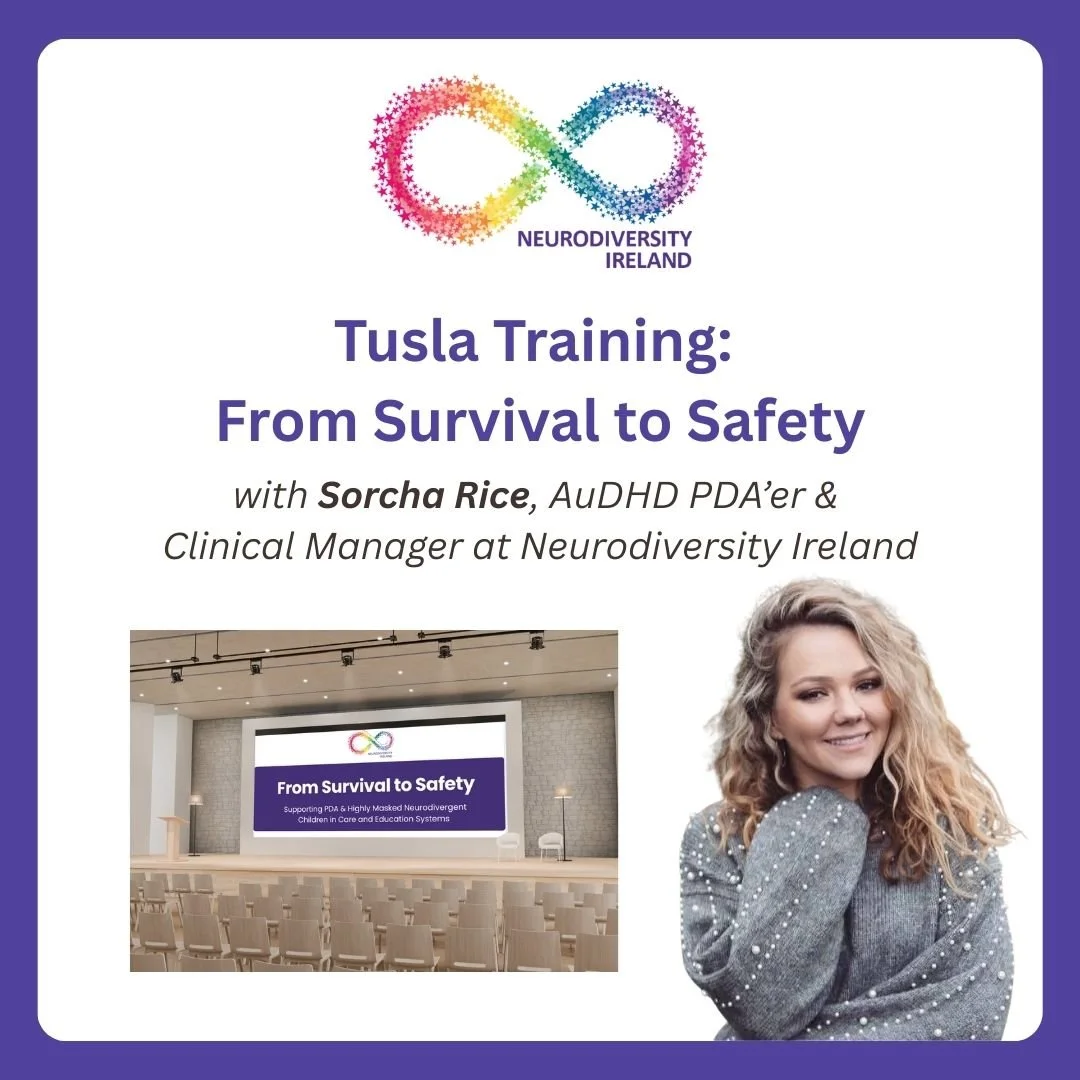
Tusla Training: From Survival to Safety (Brunel)
About the Training: From Survival to Safety
From Survival to Safety is a trauma-informed, neurodiversity-affirming training designed for professionals working with neurodivergent children and young people in care, education, and other high-pressure systems.
Many neurodivergent children, particularly PDAers and highly masked young people, are still being supported through behaviour management approaches that prioritise compliance over safety. This training offers a different lens: one that understands behaviour as communication and distress as a nervous system response, not a behavioural choice.
Delivered by Sorcha Rice, an Autistic, ADHD occupational therapist with a PDA profile, this training is deeply shaped by lived experience as well as clinical practice. It is also informed by survey responses from neurodivergent people reflecting on their own experiences of school, care, and survival — ensuring that real voices remain central to the learning.
The training focuses on:
Understanding PDA as a nervous system survival response
Recognising masked and internalised dysregulation
Moving from compliance-based approaches to co-regulation and connection
Designing environments that reduce pressure and prevent crisis before it occurs
At its core, From Survival to Safety aims to shift systems away from behaviour management and towards nervous system safety — so children and young people feel safe, validated, and supported without having to reach crisis first.
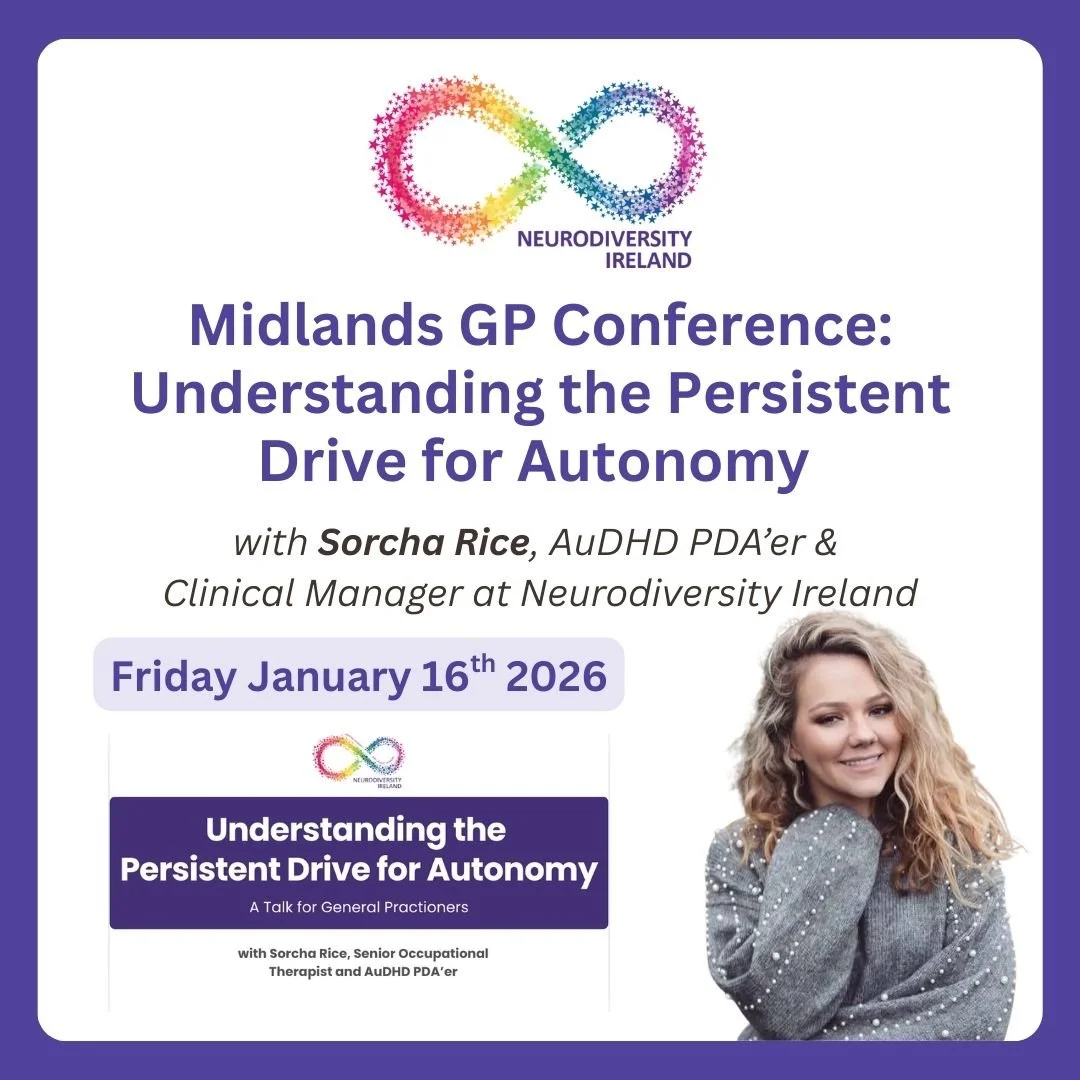
Midlands GP Conference: Understanding the Persistent Drive for Autonomy
About the Training: Understanding the Persistent Drive for Autonomy
Understanding the Persistent Drive for Autonomy is a specialist training for General Practitioners, offering a neurodiversity-affirming framework for understanding PDA through a nervous system and trauma-informed lens.
Children, teenagers and adults with a Persistent Drive for Autonomy often present in GP settings with high levels of distress, anxiety, shutdown, burnout, school burnout or recurrent physical health concerns linked to chronic stress. Without an understanding of PDA, these presentations can be misunderstood as oppositional behaviour, non-compliance, or treatment resistance.
Delivered by Sorcha Rice, an Autistic and ADHD occupational therapist with a PDA profile, this training integrates lived experience with clinical expertise to support GPs in recognising PDA as a survival response rather than a behavioural choice.
The session explores:
PDA as a nervous system-based drive for safety and autonomy
How chronic stress, masking and demand overwhelm impact physical and mental health
Why traditional compliance-based approaches can increase distress
Practical ways GPs can support regulation, safety and autonomy within clinical interactions
This training aims to support GPs to feel more confident and compassionate when working with PDAers and their families, improving clinical relationships and reducing the risk of escalation, misinterpretation, or unmet need.
Grandparent Webinar: Understanding Neurodiversity
Grandparent Webinar: Understanding Neurodiversity
Understanding Neurodiversity is a warm, neuroaffirming webinar created especially for grandparents and extended family members of neurodivergent children.
This session offers gentle, practical guidance to help grandparents better understand neurodiversity and feel more confident, connected, and supportive — particularly during the busy and often overwhelming Christmas season.
Led by Sorcha Rice, an Autistic and ADHD occupational therapist with a PDA profile, the webinar explores how sensory needs, nervous system differences, and pressure can impact neurodivergent children at family gatherings. It also supports grandparents to build low-pressure, joyful connections that prioritise safety and regulation.
The session covers:
Sensory needs and Christmas overwhelm
Supporting PDAers through low-pressure connection
Practical, supportive communication with parents
Creating calm, predictable, joy-filled holiday moments
This webinar is ideal for grandparents who want to support their neurodivergent grandchildren in ways that feel respectful, compassionate, and aligned with the child’s needs — while also strengthening family relationships.